Imagine sitting down with a friend who’s super passionate about history, clothes, and helping people feel better—that’s the vibe you get when learning about Miranda DiCenzo. She’s not a household name like a celebrity, but if you’re into how fashion intersects with big social ideas or how creative folks end up in counseling, her journey is pretty fascinating. We’ll chat about her background, her cool work on feminism through outfits, her shift to mental health, and what makes her tick. Think of this as a cozy deep dive, like flipping through an old photo album with stories attached.
Getting to Know Miranda DiCenzo: The Basics
Let’s start simple. Miranda L. DiCenzo is a Rhode Island-based professional who’s worn a few hats—literally and figuratively. Born and raised in the area (though she keeps personal details low-key), she’s built a career that mixes art, education, and therapy. Picture someone who can talk about a vintage dress one minute and emotional well-being the next. That’s her in a nutshell.
From what we know, Miranda graduated from the University of Rhode Island (URI) in 2011 with a bachelor’s likely focused on textiles and fashion. She stuck around for her master’s there in 2018, specializing in historic textiles. Fast forward a bit, and she earned another master’s in clinical mental health counseling from Rhode Island College (RIC) in 2024. It’s like she collected degrees the way some folks collect stamps—each one building on her love for creativity and people.
Why does this matter to you? Well, in a time when we’re all thinking more about mental health and self-expression, Miranda DiCenzo shows how diverse paths can lead to meaningful work. She’s not just academic; she’s practical, using her skills to make real differences.
Diving into Fashion History: Her Academic Beginnings
Okay, let’s rewind to her time at URI. Miranda didn’t just study fashion—she dissected it like a detective. Her big project? A master’s thesis called “Feminism and Fashion of the Twentieth Century: A Material Culture Study.” Sounds fancy, right? But break it down: she looked at clothes as clues to how women fought for equality over the decades.
In her research, Miranda DiCenzo explored the three “waves” of feminism in America. The first wave (think suffragettes in the early 1900s) dealt with voting rights, and women wore fashionable dresses to be taken seriously—not bloomers, which were seen as too radical. The second wave in the 1960s and ’70s pushed for equal pay and reproductive rights, with fashion rebelling through mini skirts and pantsuits. Then the third wave in the ’90s embraced individuality, like grunge styles that said “I don’t care about norms.”
She used real artifacts—old garments, photos, and ads—to connect the dots. It’s cool because fashion isn’t just about looking good; it’s a silent protest or a power statement. Miranda argued that what we wear reflects our mindset, whether it’s oppression or liberation. Ever thought about how your jeans might say something about freedom? That’s the kind of curiosity she sparks.
Highlights from Her Thesis Research
To make it easier, here’s a quick table summarizing the feminism waves she covered, based on her work:
| Feminism Wave | Time Period | Key Fashion Shifts | Social Connection |
|---|---|---|---|
| First Wave | 1840s-1920s | From corsets to simpler dresses; avoiding “radical” trousers | Women dressed fashionably to gain respect in suffrage fights, avoiding gender-bending looks that could alienate supporters. |
| Second Wave | 1960s-1980s | Mini skirts, pantsuits, disposable paper dresses | Rebellion against beauty standards; clothing as a tool for independence and challenging norms like the “Jackie O” polished look. |
| Third Wave | 1990s onward | Punk, grunge, eclectic styles | Embracing anti-fashion; personal choice over conformity, reflecting diverse identities and ongoing fights for equality. |
This table pulls from her analysis, showing how clothes weren’t random—they mirrored society’s shifts. Miranda’s approach was hands-on, using URI’s massive collection of over 16,000 historic items. She even presented this at conferences, earning grants along the way.
The Exhibition That Brought History to Life
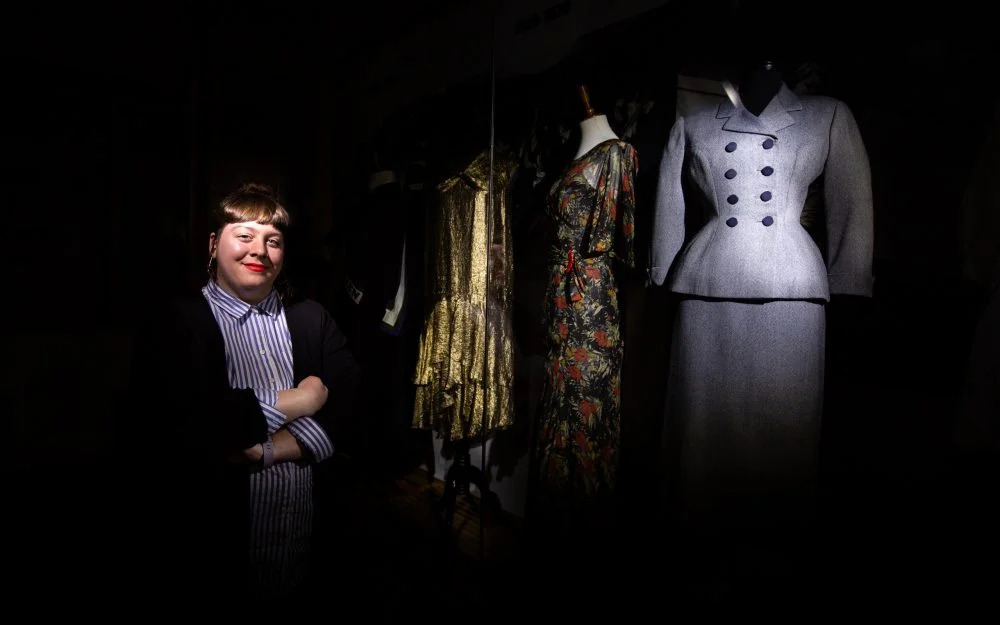
Now, here’s where it gets fun. As part of her thesis, Miranda DiCenzo curated an exhibition at URI’s Quinn Hall Textile Gallery in 2018. Called “Feminism and Fashion of the Twentieth Century,” it ran through spring 2019 and featured 17 outfits from the 1870s to the 1990s.
Picture this: a bustled hoop skirt next to 1930s silk pajamas, showing how women’s clothes went from restrictive to freeing. She included a grunge outfit from her own closet to wrap it up—talk about personal touch! The show wasn’t just pretty; it made you think about power dynamics. Miranda quoted folks like Naomi Wolf, who said as women gain power, beauty rules tighten. Or Margaret Thatcher advising against trousers to keep authority.
In interviews, Miranda shared how fashion communicates beliefs. “You’re judged by your clothing,” she said. “It’s all about choice.” If you’ve ever felt empowered by an outfit, you get it. This exhibition bridged academia and real life, making complex ideas accessible. It even got mentions in local spots, like a URI business tweet highlighting its political angle.
After that, she interned at the Rehoboth Antiquarian Society in 2019-2020, focusing on historic textiles. It’s like she couldn’t get enough of those old fabrics!
Teaching and Inspiring the Next Generation
Before fully switching gears, Miranda taught at URI in the textiles department. Courses like TMD 126 covered fashion history with a mix of quizzes, projects, and group work. Students loved her—rating her 4.3 out of 5 on sites like Rate My Professors.
What stood out? She’s caring, quick with emails, and even hilarious in lectures. One review said she’s “super nice and always willing to help.” But she’s no pushover—some noted she’s a tough grader, balancing kindness with high standards. It’s that mix that makes great teachers, right? She brought history alive, probably tying in her feminism research to show why clothes matter beyond trends.
Pivoting to Mental Health: A Natural Evolution
Around 2023-2024, Miranda DiCenzo shifted to counseling. Why? Her profiles hint at blending arts and design with therapy. Maybe seeing how self-expression through fashion affects confidence led her there. She graduated from RIC’s clinical mental health counseling program in 2024, even serving as a peer guide.
As a peer guide, she connected with students, sharing tips on balancing school and life. It’s empathetic stuff—perfect for someone who’s studied how society shapes us.
Now, in 2026, she’s a licensed mental health counselor. She started at Northern RI Counseling Associates in September 2024 and moved to RIC’s Counseling Center in October 2024 as a clinician. There, she helps college students with everything from stress to personal growth. RIC’s center is diverse, with pros from various backgrounds, and Miranda fits right in.
Fun fact: In a 2025 RIC Instagram reel, she was featured in a “Swag Wagon” game guessing top artists—shows she’s relatable and involved in campus fun.
The Personal Side: Hobbies and Passions
Beyond work, Miranda’s got a vibrant life. She loves hiking, concerts, karaoke, dancing, and hanging with family and friends. Creativity shines through—she makes collages to relax. Her Pinterest boards (under SwomeeSwan) show interests in photography, nature, home decor, and chairs—random but charming.
It’s easy to see how this ties back: art as therapy, fashion as expression. Even in her free time, she’s blending worlds.
Wrapping It Up: What We Can Learn from Miranda DiCenzo
So, there you have it—Miranda DiCenzo’s story is about evolution. From curating feminist fashion exhibits to counseling students, she shows how passions can intersect. If anything, take away this: Your clothes, your hobbies, your career—they all say something about who you are. Next time you pick an outfit, think of her research. Or if you’re feeling stuck, remember it’s okay to pivot, like she did.
Curious for more? Check out her work at URI or reach out via RIC (mdicenzo@ric.edu). Who knows, maybe it’ll inspire your own blend of creativity and care.



Leave a Reply