
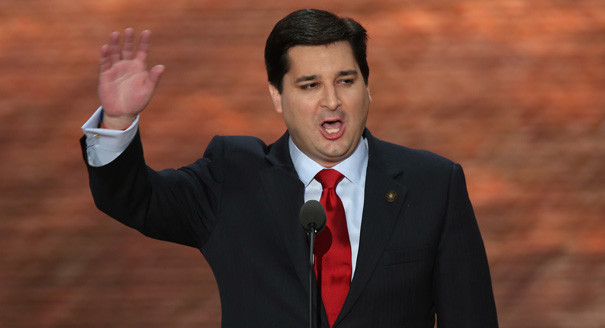
As I’m writing this in January 2026, the topic of david rouzer stock trades has been circulating more than you might expect—especially with recent filings and reports showing activity from this U.S. Representative that caught the attention of markets and civic watchers alike. (Yep, even in mid-winter, when most trading chatter is usually about earnings season or Fed decisions, Rouzer’s trades have become a conversation point.)
Here’s what I learned after digging into disclosure filings, market tracking services, and reports that place Rouzer’s stock moves in broader context.
Who Is David Rouzer and Why Do His Trades Matter?
David Cheston Rouzer is a Republican member of the U.S. House of Representatives from North Carolina’s 7th District, serving in Congress since 2015.
Unlike professional traders or Wall Street analysts, Rouzer isn’t known as a market expert. But like many members of Congress, he’s required by law (the STOCK Act) to publicly disclose his personal stock transactions—these are tracked and frequently analyzed to gauge whether lawmakers are making moves worth noting.
That raises the first obvious question: why would a politician’s stock trades matter to people outside of politics?
Because, believe it or not, the interplay between public service, private investments, and markets speaks to transparency, ethics, and sometimes performance analytics.
The Recent Boeing Trade: A Closer Look
The trade that has drawn the most recent attention is Rouzer’s sale of Boeing Co (NYSE: BA) stock. According to a filing disclosed on January 7, 2026, the transaction itself occurred on December 9, 2025. The disclosed value range is broad—between $1,001 and $15,000—which is standard for these congressional reports. Some aggregators, interpreting the filing differently, have reported the upper bound as $30,000. This sale is notable because it represents his most recent disclosed trade as of this writing.
So, what was happening with Boeing at that time? The company was (and still is) in a complex period. While it posted a significant earnings-per-share miss in late October 2025, its revenue showed strong year-over-year growth of over 30%. Furthermore, the weeks surrounding Rouzer’s trade saw major positive news for Boeing’s order book, including a landmark 110-aircraft order from Alaska Airlines—its largest ever from the carrier. This creates an intriguing context: Was the sale a response to operational headwinds, or simply portfolio rebalancing amid positive industry developments? The disclosure form doesn’t tell us that.
What Has Rouzer Actually Been Trading?
Most of Rouzer’s documented trades revolve around a handful of large, well-known companies. For example:
-
In December 2025 he sold Boeing (NYSE: BA) shares valued between approximately $1,001 and $15,000, disclosed in early January 2026.
-
His trade history includes prior sales and purchases going back several years involving stocks like NVIDIA Corporation (NVDA) and Berkshire Hathaway Inc (BRK.B).
These aren’t enormous trades by hedge-fund standards (we’re talking low-five-figures), but they are documented and recorded publicly because of federal requirements for lawmakers.
What this doesn’t automatically mean is that Rouzer’s trades are market signals you should follow. Not at all. But there are a few interesting patterns worth exploring.
A Pattern in the Portfolio: What Gets Traded?
Looking beyond Boeing, a pattern emerges in David Rouzer’s stock trades. According to data compiled by financial tracking sites, his most traded stocks over the past five years include:
-
Berkshire Hathaway Inc. (BRK.B)
-
Altria Group Inc. (MO)
-
Pinterest Inc. (PINS)
The sectors he engages with most frequently are Financial Services and, based on the companies listed, likely Consumer Goods and Technology. His trading volume isn’t exceptionally high—the data suggests a pattern of a few transactions per year, often in the same mid-four-figure value ranges. This isn’t the activity of a day trader, but rather of someone making occasional, deliberate adjustments to a personal investment portfolio.
Are These Trades “Successful”? What the Numbers Say
Now here’s where it gets interesting (and perhaps a bit surprising): various data tracking platforms noted that Rouzer’s portfolio saw strong returns in recent years—especially influenced by tech stocks like Nvidia that surged significantly over multi-year holds.
For example, one report highlighted that a set of Congress members including Rouzer outpaced typical market performance in 2024, with Rouzer’s portfolio reportedly rising a very robust amount largely due to earlier tech positions.
But—and this is a big but—his own staff noted publicly that Rouzer “has not purchased or sold a single stock asset since 2022,” suggesting that the outsized percentage returns could be more about holding positions that appreciated, not active trading skill.
So is he a whiz investor? Maybe a bit lucky on timing, but more likely he just happened to hold strong performers during bullish cycles (like NVDA).
What the STOCK Act and Disclosure Filings Actually Imply
Let’s answer the obvious question: do these trades mean he has insider knowledge?
No. The STOCK Act prohibits members of Congress from trading on material non-public information, and every trade must be filed in a timely disclosure report.
That said, these disclosures do provide a rare public window into what lawmakers own, which fuels analysis about investment behavior in capitals compared to Main Streets.
But keep this in mind: these transactions are often standard market trades—not trade recommendations or signals.
How Investors (and Critics) Respond
If you’ve ever glanced at market chatter boards after a news story about “politicians beating the market,” you’ll know that investor sentiment can get… vocal.
Some traders interpret these filings as interesting data points—sort of like watching institutional investors move in or out of sectors.
Others use this as a springboard to call for tighter regulations around what lawmakers can trade (especially after seeing some members’ portfolios outperform broad indices).
This reminds me of when I tried to spot patterns in retail trade volumes during the 2020–2021 meme stock run—looking at a chart is one thing, but you still have to interpret why the price moved, and that’s rarely simple.
So Should You Trade What Rouzer Trades?
Here’s the honest truth: should you base your trades on david rouzer stock trades?
No.
No matter how many times someone posts a transaction, the context matters:
-
What time frame is he holding these stocks?
-
What’s the size relative to his portfolio?
-
Does he have long-term goals versus short-term moves?
Also, many outlets like and provide far more comprehensive data on these companies than a single trade disclosure does.
If you’re considering this, here’s what you should know: a filing doesn’t equal foresight.
What This All Means in Early 2026
It’s winter, earnings season approaches, and the debate about congressional trading continues to heat up (yes—even in January).
Every now and then, some quirky story about a politician’s portfolio popping into the headlines reminds us that markets and civic life are intertwined. We watch earnings, we watch inflation data, and sometimes we watch public servants’ stock disclosures.
Game changer.
But the best investors—amateur or professional—are the ones who dig into why a stock moves, not just who traded it.
At the end of my research/testing on david rouzer stock trades, I’m struck by how easy it is to grab headlines but how nuanced the story actually is. You can see a number next to a name in a filing, but without context, that number means very little. What I take away from this isn’t a stock tip—it’s a reminder: transparency is valuable, but it’s not advice.
How the Public Can Access and Use This Information
Curiosity about a representative’s finances is a healthy part of civic engagement. Several websites aggregate this data, making it more accessible than the raw government databases. For example:
-
Quiver Quant offers a dedicated tracker for Rouzer, showing trade volume by year and estimated portfolio allocations.
-
GuruFocus provides a clean summary of his trading history and top traded stocks.
-
MarketBeat and other financial news services often generate instant alerts on notable trades, like the Boeing sale, providing both the disclosure data and market context.
The official source is the U.S. House Clerk’s office, which publishes the periodic transaction reports as mandated by the STOCK Act. These sites simply parse that data into more digestible formats. For the truly dedicated, the Federal Election Commission also provides detailed records of campaign finance, which is a separate but related aspect of a politician’s financial footprint.
| Feature | David Rouzer’s Activity (Based on Disclosures) | The “Average” Active Congressional Trader | Completely Blind Trust (Ideal Model) |
|---|---|---|---|
| Frequency of Trades | Low to Moderate (~14 trades since 2020) | Varies wildly; some members trade weekly | N/A (Assets are managed independently) |
| Disclosure Transparency | Medium (Legally compliant, broad value ranges) | Medium (Same legal framework applies) | High (No individual trades to disclose) |
| Potential for Perceived Conflict | Present (Inherent in any individual trading) | Present to High | Effectively Eliminated |
| Public Scrutiny Level | Moderate (Increases around specific trades) | High (For the most active traders) | Very Low |
As the 2026 election cycle begins to hum in the background, the scrutiny on the personal finances of those in power never fully dims. Researching David Rouzer’s stock trades is less about uncovering scandal and more about observing the mechanics of a system built on disclosed trust. The data shows a representative who trades infrequently and within common valuation bands, a far cry from the stereotypical image of a wheeling-and-dealing politician. Yet, each transaction, like the Boeing sale, exists within a cloud of unanswerable questions about the confluence of information, timing, and action.


Leave a Reply