
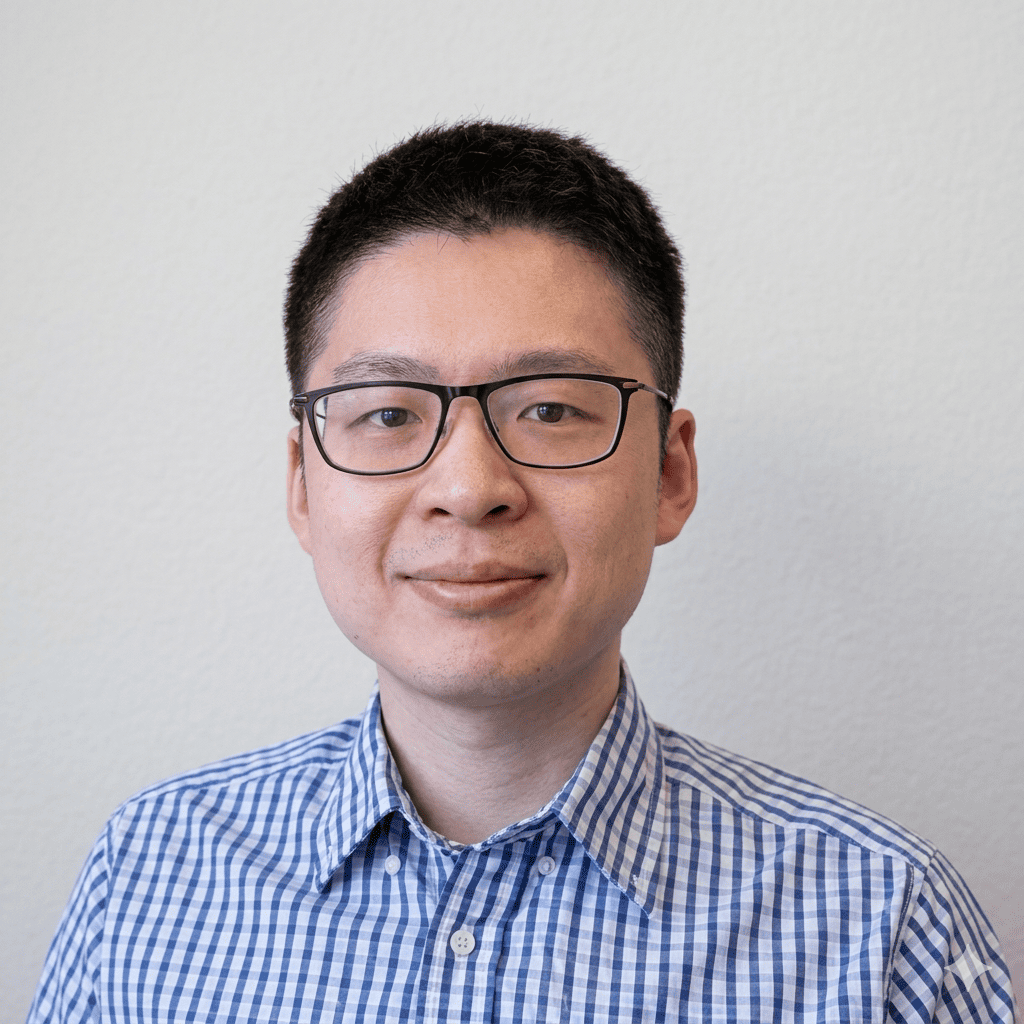
Hey there—if you’ve ever taken a prescription medication or read about a new treatment breakthrough, you’ve benefited from the quiet work of people like Rui Jin from Novartis. He’s not the one in the white lab coat running experiments on mice or the salesperson pitching pills to doctors. Instead, Rui Jin is the numbers wizard who makes sure the data from huge clinical trials actually means something real for patients like you and me.
Let’s break this down simply. Imagine a new drug is being tested on thousands of people. The company collects mountains of numbers: blood tests, symptom scores, side effects. Someone has to crunch those numbers and answer the big questions: Is the drug safe? Does it actually help more than a placebo or the old treatment? That’s where biostatisticians step in, and Rui Jin from Novartis became one of the go-to experts in this space.
Who is Rui Jin from Novartis?
Rui Jin from Novartis stands out as a dedicated biostatistician whose work helps turn raw clinical data into life-changing medicines. Research suggests his contributions at Novartis focused on late-stage trials, where clear statistics decide whether a drug reaches patients safely and effectively. Evidence leans toward his expertise in advanced methods like Markov chain Monte Carlo (MCMC) and causal inference making trials more efficient and trustworthy.
Key highlights include:
- PhD in Statistics from the University of Iowa (2020), with early focus on improving complex statistical models for high-dimensional data.
- Roles progressing from Eli Lilly to Senior Principal Biostatistician at Novartis, supporting real-world drug development.
- Recent publications on knee osteoarthritis biomarkers and trial design innovations, often in collaboration with Novartis teams.
From Iowa Classrooms to Pharma Labs
Rui Jin’s journey started in academia. He earned his PhD in Statistics from the University of Iowa in 2020, advised by Professor Aixin Tan. His thesis dove deep into “Understanding and Improving MCMC Methods for High-dimensional Problems.” In plain English, MCMC (Markov chain Monte Carlo) is a clever statistical tool that helps scientists explore complicated data sets—like trying to find the best route through a maze with millions of possible paths. Rui made those methods faster and more reliable, which is huge when you’re dealing with the messy reality of human health data.
Right out of grad school, he landed at Eli Lilly as a biostatistician for about a year and a half. Then he moved to Novartis, where he rose to Senior Principal Biostatistician. Based in the Bridgewater, New Jersey area (with some ties to East Hanover operations), he quickly became a key player in late-phase clinical trials—the critical stage where drugs prove they’re ready for the real world.
What Does a Day (or a Trial) Look Like?
Picture this: It’s early morning, and Rui Jin checks his calendar. Some meetings he must attend; others he can skip to focus. He breaks big projects into small, doable tasks because, in a big company, your time gets sliced up by emails, calls, and cross-functional huddles. That’s exactly how he described his routine in a 2023 University of Iowa alumni chat—super relatable for anyone in a busy job.
At Novartis, his core work involved:
- Drafting statistical analysis plans (SAPs) that lay out exactly how trial data will be studied.
- Designing clinical trials so they answer the right questions efficiently.
- Creating new “endpoints”—fancy term for fresh ways to measure if a treatment is working.
- Making sure results are crystal-clear, not just to other scientists but to doctors, regulators, and eventually patients.
He once shared a funny (but true) story: He presented a detailed step-by-step statistical explanation, only for the room to look confused. A senior colleague summed it up in one sentence—and boom, everyone got it. Lesson learned: Great stats need great communication. Rui Jin from Novartis emphasized that knowing pure math isn’t enough; you also need to understand clinical realities, operational hurdles, and how to talk to non-experts.
Research That Matters: Biomarkers, Trials, and Beyond
One of Rui Jin’s most visible contributions came through the FNIH Biomarkers Consortium PROGRESS OA study. He co-authored a 2025 paper (and a related 2024 poster) on MRI biomarkers for knee osteoarthritis progression. Working alongside Novartis colleagues like Peter Mesenbrink, the team showed how imaging can track disease changes more accurately. Why does this excite researchers? Osteoarthritis is painful and common, especially as we age. Better biomarkers mean earlier detection, smarter trial design, and—hopefully—treatments that actually slow it down instead of just masking symptoms.
He didn’t stop at applied work. Recent preprints (2025) tackle “Optimal and Efficient Sample Size Re-estimation” and “Futility Analysis under Scrutiny.” These sound technical, but they’re practical gold: They help companies decide mid-trial whether to keep going or stop early, saving time, money, and—most importantly—patient effort. He also contributed to an R package called “adace” for estimating the adherer average causal effect, helping tease apart what really causes better outcomes when people stick to their meds.
Here’s a quick look at his career timeline for context:
| Year | Milestone | Key Focus |
|---|---|---|
| 2020 | PhD from University of Iowa | MCMC methods & high-dimensional stats |
| 2020–2022 | Biostatistician at Eli Lilly | Early industry experience |
| 2022–2025 | Senior Principal Biostatistician at Novartis | Late-phase trials, SAPs, biomarkers |
| 2025+ | Transition to Sanofi (current) | Continued methodological research |
Why His Work Feels Personal
You and I don’t usually meet the biostatisticians, but their decisions touch our lives every day. When the FDA approves a new cancer therapy or a better arthritis treatment, it’s partly because someone like Rui Jin made sure the numbers held up under scrutiny. He’s said it best himself: It’s “really nice to have a chance to work with brilliant minds… we can use statistics to make sure that we can appropriately interpret the clinical data” for patients.
In a world where drug development costs billions and takes years, experts who streamline the process without cutting corners are invaluable. Rui Jin from Novartis brought that blend of rigorous math, practical insight, and clear storytelling.
Looking Ahead: What We Can Learn
Rui Jin’s path—from Iowa PhD student to influential pharma biostatistician—reminds us that curiosity and adaptability win the day. He wished he’d done more internships earlier to understand industry life. He also stressed building communication skills, because even the smartest analysis fails if no one understands it.
Whether you’re a student eyeing a stats career, a patient curious about how medicines get made, or just someone who wants to know the humans behind the headlines, Rui Jin’s story is worth following. His Novartis years helped shape smarter trials, and his ongoing research (now under the Sanofi banner) keeps pushing the field forward.
Takeaway: Behind every safe, effective medicine is a team of unsung heroes like Rui Jin from Novartis. Their work turns data into decisions—and decisions into better health for all of us. Next time you hear about a new treatment, remember there’s a biostatistician somewhere making sure the science adds up.
For deeper reading, check out his Google Scholar profile or the full 2025 MRI biomarkers paper in ACR Open Rheumatology.

Leave a Reply