
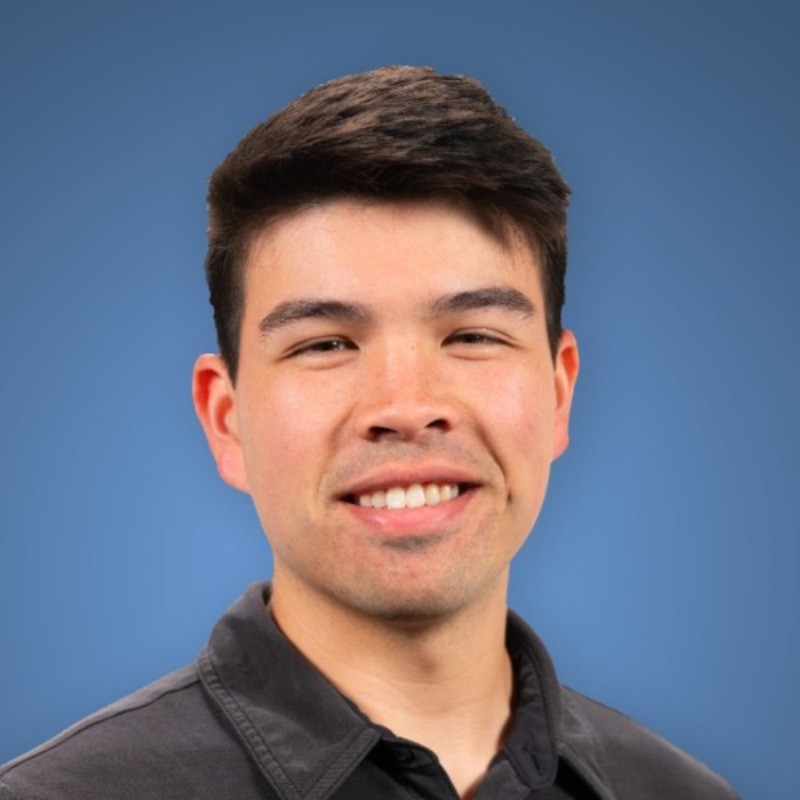
Ever wondered what it’s like to turn a college passion into a cutting-edge career? Tyler Harp’s story at CMU is a perfect example, full of twists from undergrad antics to PhD breakthroughs. We’ll unpack his background, research adventures, and why his work matters— all while keeping things light and relatable. Grab a snack; this is going to be a fun ride through the world of robotics.
Getting to Know Tyler Harp: The Basics
Let’s start simple. Tyler Harp hails from Armonk, New York—a quiet spot that probably fueled his curiosity for bigger things. He kicked off his CMU journey around 2019 as an undergrad in Mechanical Engineering with a Robotics minor. Why CMU? It’s a powerhouse for tech innovators, and Tyler fit right in.
But he wasn’t all books and bots. As a freshman midfielder on the men’s soccer team, he logged time on the field with the Tartans. Playing for Byram Hills High School and FC Westchester back home prepped him well. In nine games, he didn’t rack up points, but hey, every team needs solid support players. It’s a reminder that even robotics whizzes need balance—maybe that’s why he’s so grounded.
Fast forward, and Tyler stuck around for grad school. He earned his PhD in Robotics from CMU’s School of Computer Science, defending his thesis in late 2025 on autonomous robotic data gathering. That’s fancy talk for teaching robots to collect info in messy real-world spots, like forests or disaster areas. If you’ve ever lost your keys, imagine a robot finding them in a storm— that’s the vibe.
Inside the AirLab: Where the Magic Happens
CMU’s AirLab is like a playground for drone lovers, and Tyler was right at home. Under Professor Sebastian Scherer’s guidance, he dove into the Wildfire project. The goal? Build robots that handle wildfires by mapping terrain and spotting dangers. It’s timely work, given rising climate challenges.
Tyler’s focus: 3D mapping, localization, and SLAM. SLAM helps robots build maps while figuring out where they are— no GPS needed. Picture your phone’s GPS glitching in a tunnel; SLAM fixes that for drones. He also got FAA-certified as a Part 107 drone pilot in 2025, adding practical chops to his resume.
One cool tidbit: Tyler’s research tackles “degraded environments,” like smoke or rain where normal cameras fail. It’s not just theory; it’s about real impact, like aiding firefighters. We love how this blends engineering with heroism— who knew robots could be sidekicks?
Key Research Contributions: Papers That Pack a Punch
Tyler’s not one to hide in the lab; his work is out there for all to see. Let’s break it down with some highlights.
First up, his 2025 Master’s thesis: “Vision-Based Multi-Wire Detection and Tracking for UAV Wire Approach.” Drones hitting power lines? Big problem. Tyler’s system uses cameras to spot and track multiple wires, helping UAVs land safely. It’s niche but crucial for utility inspections or search-and-rescue.
Then there’s the FIReStereo dataset from 2024. Co-authored with folks like Devansh Dhrafani and Yifei Liu, it’s a treasure trove of thermal stereo images from forests— over 200,000 pics! Collected via drones with LiDAR and IMUs, it trains models for depth perception in smoke or night. Models like Fast-ACVNet shone here, proving robots can “see” through chaos. This dataset fills a gap in wildfire tech, making UAS (unmanned aerial systems) more reliable.
And the crown jewel: “MAC-VO: Metrics-Aware Covariance for Learning-Based Stereo Visual Odometry.” This 2025 paper won Best Paper at ICRA (International Conference on Robotics and Automation). Tyler and team improved how robots estimate movement using stereo cameras, adding smart covariance for accuracy. It’s a game-changer for efficient, onboard computing— think lighter drones that think faster.
Here’s a quick comparison of his key projects in a table for clarity:
| Project/Paper | Focus Area | Key Innovation | Impact |
|---|---|---|---|
| UAV Wire Detection Thesis | Vision-based tracking | Multi-wire detection algorithm | Safer drone operations near infrastructure |
| FIReStereo Dataset | Thermal stereo in degraded environments | 204,594 images with ground truth depth | Enables training for wildfire navigation |
| MAC-VO Paper | Stereo visual odometry | Metrics-aware covariance estimation | Award-winning efficiency for robot perception |
These aren’t isolated wins; they build on each other, showing Tyler’s growth from student to expert.
Life Beyond the Lab: Skills, Internships, and Fun
Tyler’s toolkit? Autonomy software, sensor fusion, perception— all honed at CMU. He interned at Symbotic, praising the team for top-notch collab. Now at a stealth startup, he’s crafting compute-efficient systems for robots. It’s hush-hush, but expect big things in autonomy.
Outside work, he’s into sports like soccer and skiing, plus coffee hunts and car tinkering. It humanizes him— robotics pros are people too! If you’re a student eyeing CMU, Tyler’s path shows blending passions pays off.
Why Tyler Harp’s Work Matters in Today’s World
In a world buzzing with AI and drones, Tyler’s contributions at CMU stand out. His tech could revolutionize disaster response, from wildfires to urban searches. But it’s not without debate— some worry about robot ethics or job impacts. Tyler’s approach seems balanced, prioritizing safety and efficiency.
For young readers: Imagine building a Lego robot that maps your room. That’s Tyler’s world, scaled up. For adults: His research underscores how universities like CMU drive innovation, partnering with labs to solve real problems.
Key Highlights on Tyler Harp at CMU
- Educational Background: Earned his bachelor’s in Mechanical Engineering and Robotics from CMU, followed by a PhD in Robotics from the School of Computer Science.
- Research Focus: Specialized in 3D mapping, localization, and SLAM (Simultaneous Localization and Mapping), with hands-on work in wildfire response tech.
- Notable Achievements: Co-authored award-winning papers, including one that snagged Best Paper at ICRA 2025, and contributed to datasets for tough environments.
- Beyond Academics: Played midfielder for CMU’s men’s soccer team as a freshman, showing he’s got that team-player vibe.
- Current Gig: Now at a stealth startup, applying his skills to onboard autonomy systems—think efficient robot brains for real-life use.
Wrapping It Up: Takeaways from Tyler Harp’s CMU Legacy
So, what can we learn from Tyler Harp at CMU? Persistence pays— from soccer fields to PhD defense. Robotics is about teamwork, whether with humans or sensors. And hey, stay curious; who knows what drone tech holds next?
If this sparks your interest, check out CMU’s Robotics Institute or dive into his papers. Tyler’s just getting started— watch this space for more breakthroughs. Thanks for joining the chat; what’s your take on robots in daily life?

Leave a Reply