
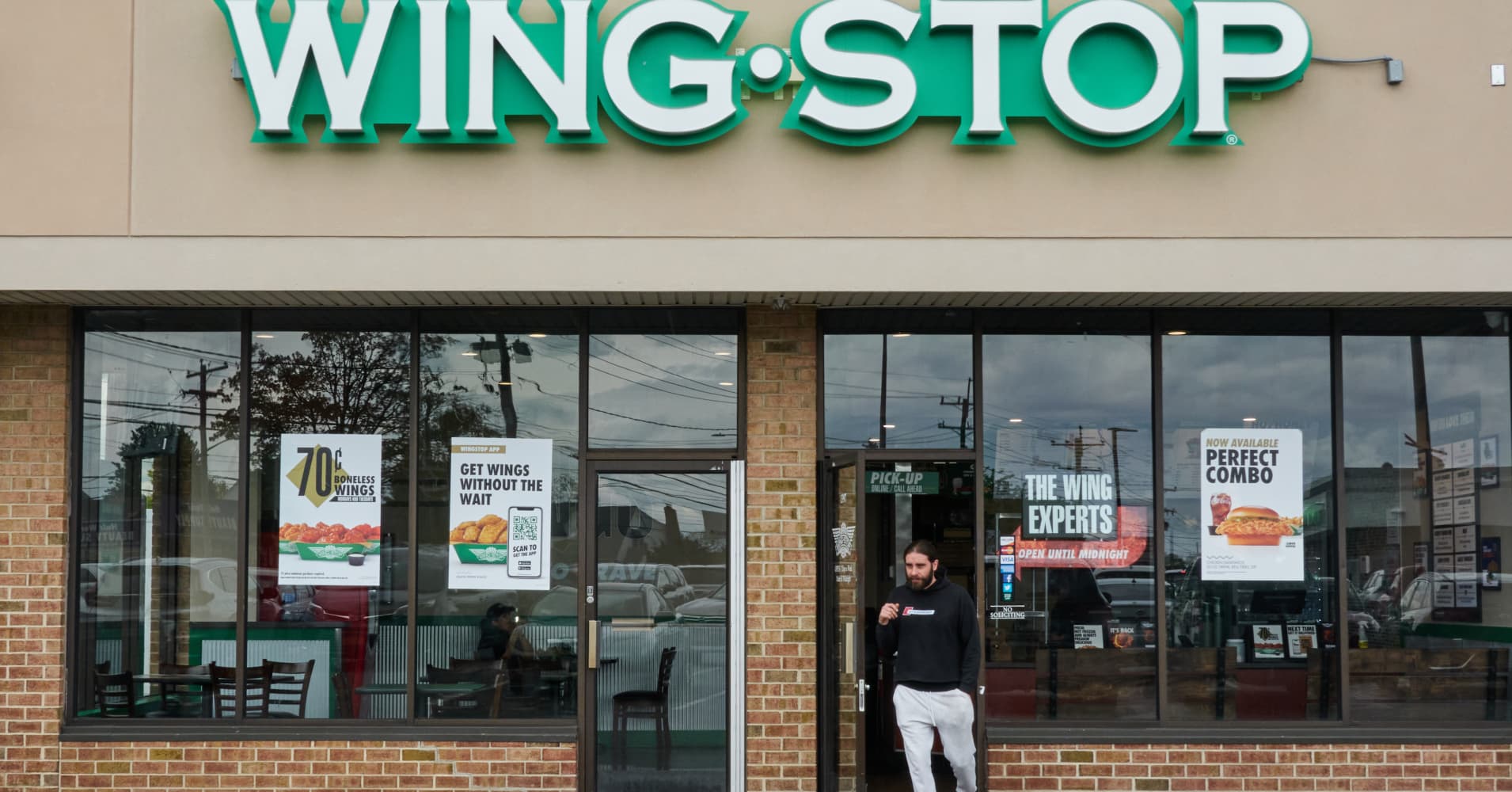
As I’m writing this in January 2026, in the thick of earnings season and macro chatter, one financial metric keeps popping up for stocks like Wingstop — especially among value and growth investors: wingstop wacc. It might sound dry, but if you’re gazing at charts, pondering a buy, or trying to understand how companies actually make money in 2026 — this matters.
So let’s break it down in everyday language, with personal insights (and a few questions you’ve probably asked yourself… like “why does this number vary so much?”).
What Is Wingstop WACC Anyway?
Wingstop WACC stands for Wingstop’s Weighted Average Cost of Capital. It’s essentially the average rate the company must pay to finance its operations — blending the cost of debt and equity into one hurdle rate. In simple terms: it’s how much Wingstop has to earn on its investments to satisfy both shareholders and lenders.
If Wingstop doesn’t generate returns above this rate — it’s probably not creating long-term shareholder value. And yes, this is exactly the kind of metric you’ll see in professional valuations like discounted cash flow models used by analysts.
So when someone says “wingstop wacc,” they’re usually referring to that financing cost — and it tells you a lot about risk, returns, and capital efficiency.
How Much Is Wingstop’s WACC Today?
Different financial sites calculate slightly different numbers (go figure). But roughly speaking:
-
One recent source pegs Wingstop’s WACC at around ~11.1% as of mid-January 2026.
-
Another updated figure showed about 11.55% on January 22, 2026.
-
Some models put it lower — so don’t freak out — these nuances come from different assumptions about beta, risk premium, debt weight, etc.
That range isn’t random. It reflects how Wingstop finances itself, how risky investors view it, and how much debt it carries. Remember: WACC isn’t a fixed, sacred number — it’s an estimate based on market data and financial modeling.
Why Does Wingstop WACC Matter to Investors?
If you’re thinking, “So what — it’s just a percentage?” — that’s a great question. The answer: WACC is a barometer for investment quality.
-
For valuations like a discounted cash flow (DCF), WACC is the discount rate used to determine today’s value of future cash flows.
-
If Wingstop’s return on invested capital (ROIC) exceeds its WACC — that’s good — the company is generating returns above what it costs to finance growth.
-
A ROIC/WACC ratio > 1 indicates value creation (and Wingstop’s has historically been above that threshold).
This reminds me of when I tried evaluating stocks with only P/E ratios — sure, it gives you a snapshot, but it ignores the cost of capital entirely. WACC gives that missing piece.
How Do Analysts Calculate Wingstop WACC?
In theory, WACC blends two major parts:
-
Cost of Equity – what shareholders expect as a return (often based on the Capital Asset Pricing Model or CAPM)
-
Cost of Debt – what the company pays to borrow money, adjusted for taxes
Put together, and weighted by how much equity vs. debt a company uses, and you get WACC.
For Wingstop:
-
Its cost of equity reflects market risk premium + beta + risk-free rate.
-
The cost of debt tends to be lower than equity, but 2025–2026 rates have pushed debt costs up globally.
And what do you get? A number that’s not just academic — it’s the minimum return hurdle for new projects and expansions.
How Does Wingstop Compare to Others in the Restaurant Space?
Let’s answer the obvious: Is Wingstop’s WACC high or low?
Across quick-service restaurants, WACC varies. For comparison:
-
Some peers like Papa John’s might operate with lower WACC, boosting their ROIC/WACC ratio.
-
Chains with weak profitability might have high WACC relative to returns — and that’s a red flag for investors.
Wingstop’s ROIC has often exceeded its WACC, which generally suggests that growth is efficient.
But — (yes, there’s always a but) — just because WACC is reasonable doesn’t mean the stock is an automatic buy. You still have to consider same-store sales trends, unit economics, consumer demand shifts, and macro headwinds.
Is Wingstop’s WACC Stable Over Time?
No — and that’s actually part of the story. As of late 2025 and early 2026:
-
Some measurements show WACC creeping up as interest rates remain elevated and market volatility persists.
-
Other models see slightly lower figures — again, depending on how debt levels and market premiums are assumed.
This variation is normal. WACC depends on external market conditions, like the risk-free rate (often proxied by long-term government bonds) and the equity risk premium. When markets get choppy (like we’ve seen into 2026), all that moves.
If You’re Considering Wingstop WACC in Investing…
Here’s what you should know:
-
It’s not a stand-alone signal. Wingstop WACC helps in valuation and risk analysis, but never replace broader research.
-
Use WACC alongside revenue trends, profit margins, and unit economics.
-
A stock can have a healthy WACC but still face demand challenges (e.g., same-store sales weakness).
-
And hey — being precise about WACC does take some judgment calls (like which beta to use).
If you’re building a DCF or comparing competitors, WACC is your foundation — without it, valuation is guesswork.
So, What’s the Big Takeaway on wingstop wacc?
Game changer.
It’s one of those financial metrics that sound nerdy, but once you get it — you see how it underpins corporate finance and investor logic. For Wingstop (WING), WACC in the low-to-mid double digits means investors expect solid returns — and historically, Wingstop has delivered returns above that cost.
But the world in 2026 isn’t static. With macro uncertainty and evolving consumer behavior, WACC — and how companies manage their capital structures — will likely remain a core lens through which investors view growth opportunities.
This reminds me of when I first tried valuing a company without considering its cost of capital — I ended up with projections that made no real-world sense. WACC grounded my assumptions in reality.
As markets evolve, the real measure isn’t the WACC number itself — it’s how a company like Wingstop adapts its strategy to generate returns above that cost. In the end, it’s not just a percentage: it’s a story about growth, risk, and the price of ambition.
Ready to dive deeper into financial metrics like this? You might find articles on Investopedia’s WACC overview and examples or the weighted average cost of capital explanation on Wikipedia helpful.



Leave a Reply