
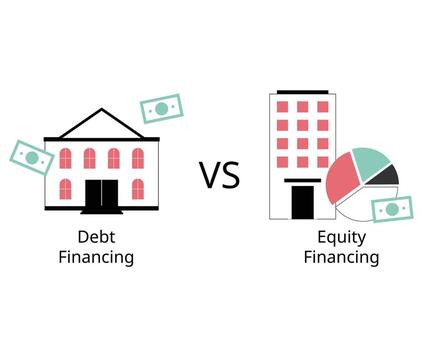
Every growing business eventually reaches the same crossroads: it needs more capital than it currently has. Maybe it’s a new location, a piece of equipment, a hiring push, or simply enough working capital to keep up with growing demand. Either way, the two paths available — debt and equity — aren’t just different funding mechanisms. They come with fundamentally different consequences for control, risk, and how the business operates for years afterward.
Roughly 70% of small businesses use debt financing at some point during their growth, according to Small Business Administration data, making it the more commonly used option overall. But “most common” doesn’t mean “always right.” The correct choice depends heavily on the business’s stage, cash flow stability, and how much control the owner is willing to share — and choosing incorrectly can quietly undermine a business’s long-term stability, regardless of how much capital it raises in the short term.
This guide breaks down what debt and equity financing actually mean in practice, the real tradeoffs behind each, and how to think about the decision through a long-term lens rather than simply chasing the fastest available cash — the same philosophy covered throughout FONENDI’s Business Thinking library.
What Debt Financing Actually Means
Debt financing means borrowing money — through a bank loan, line of credit, SBA loan, or similar instrument — with an obligation to repay the principal plus interest, regardless of how the business performs. The lender has no ownership stake and no say in strategic decisions; they simply expect to be repaid on schedule.
Advantages of debt financing:
- Full ownership retained. Lenders don’t get a vote in how the business is run.
- Predictable obligations. Fixed-rate loans mean payment amounts don’t change, which makes budgeting and forecasting more straightforward.
- Tax-deductible interest. Interest paid on business loans typically reduces taxable income, lowering the effective cost of borrowing.
- No profit sharing. Every dollar of profit stays with the owner once the debt is repaid.
Disadvantages of debt financing:
- Repayment is required regardless of performance. A slow month doesn’t pause the loan payment.
- Qualification requirements. Lenders generally want an established credit history, predictable cash flow, or collateral — which can make debt financing difficult for newer or less predictable businesses.
- Cash flow strain. Regular repayments reduce the cash available for operations, especially during downturns.
What Equity Financing Actually Means
Equity financing means raising capital by selling a stake in the business — to angel investors, venture capital firms, partners, or through equity crowdfunding. In exchange for their investment, these investors receive a share of ownership and, in many cases, some influence over major decisions.
Advantages of equity financing:
- No repayment obligation. If the business has a rough year, there’s no fixed payment due regardless of performance.
- Shared risk. Investors absorb part of the downside if the business struggles, since their return depends on the business succeeding.
- Added expertise and networks. Many equity investors, particularly angel investors and experienced partners, bring guidance and connections beyond just capital.
- More accessible for early-stage or unpredictable businesses. Businesses without a strong credit history or steady cash flow can sometimes raise equity capital when they wouldn’t qualify for a loan.
Disadvantages of equity financing:
- Diluted ownership and control. Investors typically expect a say in key decisions, and disagreements over direction are common.
- Long-term cost. Giving up even a modest ownership stake can be far more expensive over time than the interest on a loan, especially if the business grows significantly.
- Complexity. Structuring equity deals, valuations, and investor agreements is generally more involved — and expensive — than securing a standard loan.
Side-by-Side Comparison
| Debt Financing | Equity Financing | |
|---|---|---|
| Ownership impact | None — full ownership retained | Partial ownership given up |
| Repayment obligation | Fixed, required regardless of performance | None — investors share the risk |
| Cost structure | Interest, often tax-deductible | Ongoing share of profits and future value |
| Control | Lender has no say in operations | Investors often expect input on major decisions |
| Best suited for | Businesses with predictable cash flow and a credit history | Early-stage businesses without steady cash flow or collateral |
| Risk during downturns | Repayment still due even in a bad quarter | No fixed payment due if performance drops |
The Long-Term Question Most Owners Skip
Most comparisons of debt vs. equity focus on which is “cheaper” or easier to qualify for. The more important long-term question is different: what does this financing decision cost the business five or ten years from now, not just this quarter?
A loan with a fixed repayment schedule is a known, finite cost. Once it’s repaid, it’s gone — the business owner keeps 100% of everything built afterward. An equity stake given up today is a cost that compounds for as long as the business exists. A 10% stake given away during a cash-strapped early year can end up representing a substantial amount of value a decade later, once the business has grown — value the original owner no longer fully controls.
This is the same compounding logic behind building generational wealth through business ownership: decisions made under short-term pressure often carry a long-term cost that isn’t obvious in the moment they’re made.
None of this means equity financing is a mistake — for many early-stage businesses without steady cash flow, it may be the only realistic option, and the expertise investors bring can be genuinely valuable. It means the decision deserves the same long-term thinking applied to any other major structural choice in the business, not just a focus on which option is fastest to secure.
How to Decide: A Practical Framework
1. Assess Your Cash Flow Predictability First
Debt financing works best when a business has steady, predictable cash flow that can reliably absorb fixed repayments. If revenue is inconsistent or the business is still finding its footing, a rigid repayment schedule can strain — or actively threaten — the cash flow stability a business needs to survive its early years.
2. Decide How Much Control You’re Willing to Share
This is often the most emotionally difficult part of the decision, and the one owners most commonly underestimate. According to PNC Insights, common financing mistakes include underestimating the long-term cost of giving up equity and taking on too much debt too soon — both symptoms of skipping this decision rather than making it deliberately.
3. Match the Financing Type to What It’s Actually For
A predictable, revenue-generating purchase — a second location, a piece of equipment, inventory for a proven sales channel — is generally better suited to debt, since the expected return can reasonably cover the repayment. A higher-risk, higher-uncertainty bet — an unproven new product line, aggressive market expansion — may be better suited to equity, since there’s no fixed repayment obligation if it doesn’t pan out as expected.
4. Consider a Blended Approach
Very few established businesses rely entirely on one financing type forever. Many combine both deliberately — for example, retaining full ownership through debt financing for predictable, revenue-generating needs, while occasionally using equity for higher-risk growth bets. The mix that makes sense typically shifts as the business matures and cash flow becomes more predictable.
5. Get Outside Perspective Before Deciding
Financing structure decisions are difficult to reverse. A financial advisor, accountant, or business banker familiar with a company’s specific financials can help evaluate the true long-term cost of each option — not just the immediate amount of capital available.
Beyond the Binary: Other Financing Options Worth Knowing
Debt and equity aren’t the only two options, and several hybrid or alternative forms of financing sit between them, each with their own tradeoffs:
- SBA loans — government-backed loans that often come with more favorable terms than a standard bank loan, though they typically require more documentation and a longer approval process.
- Invoice financing (factoring) — selling unpaid invoices to a third party at a discount for immediate cash. Useful for businesses with strong sales but slow-paying clients, though it comes at a cost and doesn’t fix the underlying payment-terms issue.
- Convertible debt — starts as a loan but converts into equity under specific agreed-upon terms, often used to bridge a business to its next full equity round without settling on a valuation immediately.
- Crowdfunding — raising smaller amounts from a large number of backers, sometimes in exchange for a product or reward rather than equity or repayment, though platform fees and marketing effort are real costs to factor in.
- Vendor or supplier financing — negotiating longer payment terms with suppliers, effectively creating a short-term, interest-free loan that eases cash flow without involving a bank or investor at all.
None of these eliminate the fundamental tradeoff between control and repayment obligation — they simply offer different ways of structuring it. The right combination depends on the specific need being financed, not a one-size-fits-all rule.
A Word on Timing
Financing decisions made under pressure — when cash is nearly out and a decision has to happen quickly — rarely produce the best long-term terms, whether that’s a high-interest loan or an unfavorable equity valuation. Businesses that plan their financing needs ahead of time, before the situation becomes urgent, generally negotiate meaningfully better terms and retain more leverage in the conversation, precisely because they aren’t deciding from a position of desperation. A business that approaches a lender or investor from a position of stability, with a clear plan for the capital and a realistic repayment or growth timeline, is simply a more attractive — and more powerful — negotiating partner than one that’s scrambling to avoid an immediate cash shortfall.
This is one more reason disciplined cash flow management matters beyond day-to-day survival — it also buys the time needed to make financing decisions deliberately rather than reactively.
Frequently Asked Questions
Is debt or equity financing better for a small business? Neither is universally better — it depends on the business’s cash flow predictability, credit history, and how much control the owner is willing to share. Debt tends to suit businesses with steady, predictable revenue; equity tends to suit early-stage businesses without that track record yet.
What’s the biggest mistake business owners make with financing decisions? Underestimating the long-term cost of giving up equity, or taking on debt without a clear plan for how it will be repaid — both often driven by deciding quickly under financial pressure rather than planning ahead.
Can a business use both debt and equity financing? Yes. Many businesses use a blended approach, relying on debt for predictable, revenue-generating needs and equity for higher-risk growth opportunities, adjusting the mix as the business matures.
Does taking on debt or equity financing affect long-term generational wealth? Yes, significantly. Debt is a finite, repayable cost, while an equity stake given up today represents an ongoing share of the business’s value for as long as it exists — a factor worth weighing carefully in any long-term ownership or succession plan.
Are there financing options besides debt and equity? Yes. SBA loans, invoice financing, convertible debt, crowdfunding, and vendor financing all sit between or alongside the traditional debt-versus-equity choice, each with its own cost and control tradeoffs depending on what specifically is being financed.



Leave a Reply