
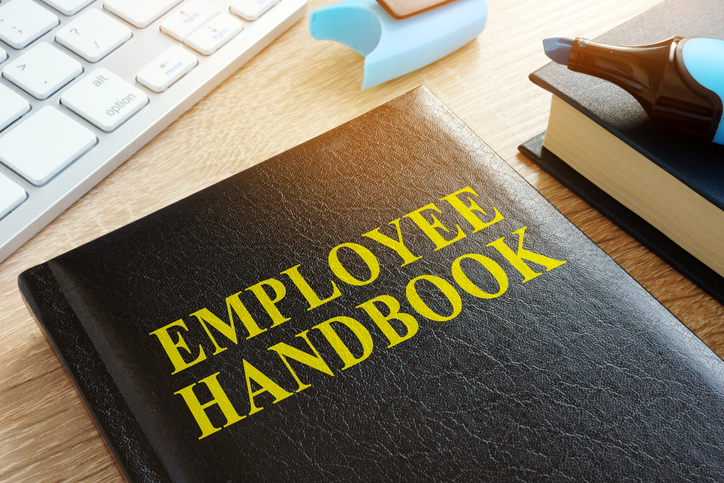
Many small business owners delay building an employee handbook. They assume it’s a formality for bigger companies with an HR department. A five- or ten-person business, they figure, doesn’t need one yet.
That assumption often costs businesses more than they expect. SCORE, a nonprofit resource partner of the U.S. Small Business Administration, notes that formal personnel policies protect a business during employee disputes. Waiting makes the task harder. The longer a business operates informally, the more employees it accumulates without written policy — and the harder it becomes to introduce structure later.
The Legal Risk Is Often Underestimated
The exposure here is real. Federal anti-discrimination laws can apply to businesses with as few as 15 employees. Many state laws set the bar even lower. California’s Fair Employment and Housing Act, for example, covers employers with just five employees.
Without a documented handbook, a business struggles to defend itself when a dispute arises. There’s no written record showing policies were communicated clearly. There’s no proof employees understood what was expected of them.
This guide covers why a handbook matters, even for very small businesses. It also walks through a complete, section-by-section template you can use to build your own — the same long-term thinking approach we cover throughout FONENDI’s Business Thinking library.
This article provides general, educational information about employee handbook content and structure. Employment law varies by state and locality. Have a qualified employment attorney review your handbook before you distribute it, to confirm it meets all applicable federal, state, and local requirements.
Why a Small Business Needs an Employee Handbook
It Provides Real Legal Protection
Most jurisdictions don’t legally require an employee handbook. But it plays a major role in legal defense when a dispute happens. A written, consistently applied policy shows a business met its legal obligations. It demonstrates the business treated employees fairly. That kind of documentation is hard to reconstruct after a dispute has already started.
It Prevents the Most Common and Costly Disputes
Employment law resources consistently flag two sections as the most important: the at-will employment disclaimer and the anti-harassment policy. These two sections address the most common — and most expensive — types of employment litigation small businesses face.
It Creates Operational Consistency
A handbook sets consistent expectations across the business. It reduces ambiguity about policies and procedures. Employees who understand expectations clearly tend to make fewer mistakes than those working without any documented reference. This directly supports the consistency we cover in our company culture guide.
It Reinforces Company Culture and Values
A well-written handbook does more than list rules. It communicates a business’s mission and values. It shows new employees the behaviors that reflect those values. This gives new hires a documented reference point for the culture they’re joining, instead of leaving them to absorb it purely through observation.
It Supports the Documentation Long-Term Businesses Need
This connects directly to two other topics we cover: succession planning and scaling. Informal, undocumented policies work fine at a very small scale. But they become a real liability as a business grows. New managers need a consistent reference point. They shouldn’t have to rely on institutional memory alone.
When Should a Small Business Create an Employee Handbook?
There’s no strict legal employee-count minimum. But best practice says build one before, or immediately after, you hire your first employee. Don’t wait until the business “needs” formal HR structure.
Building foundational policies early is easier than retrofitting them later. Employees who’ve operated informally for years grow accustomed to inconsistent, undocumented practices. Changing that pattern later takes real effort.
A Complete Section-by-Section Employee Handbook Template
1. Welcome and Company Overview
Introduce the company’s mission, vision, and values. Include a brief history. This section sets the tone for the whole handbook. It helps new employees see how their role connects to the business’s broader purpose. This directly reinforces the brand consistency we cover elsewhere in our library.
2. At-Will Employment Disclaimer
In at-will employment states, this section clarifies something important: either party can end the employment relationship, for any legal reason, at any time. This disclaimer is one of the single most important protections against wrongful termination claims.
3. Equal Employment Opportunity and Anti-Discrimination Policy
This section states the company’s commitment to equal treatment, regardless of protected characteristics. It outlines how employees can report concerns. Because this section carries significant legal weight, have legal counsel review it carefully for compliance with federal, state, and local law.
4. Anti-Harassment Policy and Reporting Process
Alongside the at-will disclaimer, this is one of the two most legally significant sections in the handbook. Define prohibited conduct clearly. Provide a specific, accessible reporting process. Describe how the business will investigate and address complaints.
5. Employment Classifications
Clarify the different employment categories at your business — full-time, part-time, exempt, non-exempt, temporary, or contract. These classifications affect eligibility for benefits, overtime, and other policies covered later in the handbook.
6. Compensation and Payroll Policies
Cover pay schedules, overtime policy, and expense reimbursement. Include any other compensation-related procedures employees need to understand.
7. Time Off and Leave Policies
This section typically covers paid time off, sick leave, holidays, and legally required leave like jury duty. Some federal leave protections — FMLA, for example — only apply above a certain employer size. Make sure this section reflects what actually applies to your business.
8. Attendance and Punctuality Expectations
Outline expectations around attendance and tardiness. Explain the process for requesting time off or reporting an absence. Note any consequences for repeated attendance issues.
9. Code of Conduct
This section covers general behavioral expectations: professionalism, dress code where relevant, and use of company property. It should reflect the culture your business is trying to build and preserve.
10. Technology, Social Media, and Communication Policy
Digital tools sit at the center of most businesses now. Cover acceptable use of company technology and email expectations here. Add guidance on social media use, especially for employees whose roles involve public-facing communication.
11. Health, Safety, and Workplace Conduct
Cover workplace safety expectations and how employees should report hazards or incidents. Include any relevant policies around substances or conduct that could create safety risks.
12. Performance Expectations and Review Process
Describe how the business evaluates performance and how often reviews happen. Explain what employees can expect from feedback and growth conversations. This connects directly to the mentorship and knowledge transfer practices we cover elsewhere.
13. Discipline and Termination Procedures
Outline the general process for addressing performance or conduct issues. Be careful here: language that implies a guaranteed, multi-step disciplinary process can undermine at-will flexibility. This is an area where legal review matters most.
14. Confidentiality and Intellectual Property
This section protects proprietary information, client data, and intellectual property created during employment. It matters more every year, as more business operations involve digital data and client information.
15. Handbook Acknowledgment Form
Require employees to sign an acknowledgment confirming they received, read, and understood the handbook. This documentation is one of the most important pieces of evidence in defending against employment claims. It proves the policies were actually communicated, not just written down somewhere.
How to Build Your Handbook: A Practical Process
Step 1: Start With the Legally Essential Sections
Building a complete handbook can feel overwhelming. Start with the at-will disclaimer, anti-harassment and anti-discrimination policies, and the acknowledgment form. These provide the most protection first. You can expand into a fuller document over time.
Step 2: Research Your Specific State and Local Requirements
Employment law varies by state. Some states impose requirements well beyond federal minimums. Confirm exactly what applies to your business’s location — or locations, if you have employees in more than one state.
Step 3: Draft Policies That Reflect How the Business Actually Operates
A generic template, copied without adjustment, can create inconsistencies. Those inconsistencies undermine the handbook’s legal value. Write policies that describe what your business genuinely does — not an idealized version that doesn’t match reality.
Step 4: Have an Employment Attorney Review the Final Document
A handbook carries real legal weight. Have a qualified employment attorney review the complete document before you distribute it. Pay particular attention to the sections tied most closely to legal exposure: at-will language, anti-discrimination policy, and leave provisions.
Step 5: Distribute and Collect Signed Acknowledgments
Distribute the finished handbook to every employee. Collect a signed acknowledgment from each one, and keep these records on file. An unsigned or undistributed handbook offers far weaker legal protection than one you can clearly show was communicated to, and understood by, every employee.
Step 6: Review and Update the Handbook Regularly
Employment law changes. So does your business. Review the handbook annually. Check for legal updates, and confirm the policies still reflect how the business actually operates today.
The Real Cost of Not Having a Handbook
It’s worth quantifying what’s actually at stake. Employment-related litigation has grown substantially over the past two decades. The absence of documented policy is a recurring factor that weakens a small business’s position when a dispute arises.
Consider two common scenarios.
Without a handbook: An employee gets terminated for repeated attendance issues. The business has no documented attendance policy, no clear record of prior warnings, and no signed acknowledgment. It struggles to prove the termination was consistent, fair, and unrelated to any protected characteristic. This leaves the business more exposed if the former employee pursues a wrongful termination claim.
With a handbook: The same termination happens. But this time, the business has a documented attendance policy, a signed acknowledgment on file, and a clear record of prior communication. The business is in a much stronger position to show the decision followed established, communicated policy. That difference often separates a claim that turns into costly litigation from one that gets resolved quickly, or never gets filed at all.
Neither scenario guarantees a specific outcome. But the documentation gap between them represents a real, measurable difference in legal exposure — one a modest upfront investment in a well-built handbook can close.
Handbooks for Remote and Hybrid Teams
More small businesses now operate with remote or hybrid employees. A handbook built only for in-office work misses several important considerations.
- Remote work eligibility and expectations — which roles qualify for remote work, expected availability hours, and communication responsiveness standards
- Equipment and expense policies — what equipment the company provides versus what employees supply themselves, and how remote-work expenses get handled
- Data security for remote work — expectations around secure networks, device security, and handling company or client data outside a traditional office
- Multi-state employment considerations — if remote employees live in different states than your headquarters, the handbook must reflect the employment laws that apply to each employee’s actual work location
Remote work policy expectations keep shifting. Revisit this section closely during your annual review. What counted as standard practice two years ago may no longer reflect current legal or operational best practice.
Employee Handbook vs. Standalone Policies: Which Should a Very Small Business Start With?
A business with just one or two employees might find a complete handbook disproportionate to its current needs. SCORE recommends a different starting point for these businesses: a small number of genuinely essential standalone policies, rather than a full handbook from day one.
Start with the at-will disclaimer, an anti-harassment policy, and a basic attendance and time-off policy. These provide meaningful protection even before you build out a complete handbook.
This staged approach mirrors the broader philosophy we cover throughout Business Thinking: build foundational structure early, even in minimal form. That’s far easier than retrofitting comprehensive documentation onto a business that’s operated informally for years. You can expand a handful of essential policies into a full handbook as the business grows.
Common Mistakes Small Businesses Make With Employee Handbooks
- Copying a generic template without adjusting it to your business’s actual practices and specific state requirements. This creates a mismatch between written policy and real operations, and that mismatch can undermine legal protection.
- Never collecting signed acknowledgments. Without them, you have no clear evidence that employees actually received and understood the policies.
- Writing overly rigid disciplinary procedures. These can accidentally create an implied contract, which undermines at-will employment status where flexibility matters to the business.
- Treating the handbook as a one-time project. Employment law changes, and so does the business — an outdated handbook stops protecting you the way it should.
- Skipping legal review to save cost. This often leads to much higher legal costs later, if a poorly drafted policy becomes a liability during an actual dispute.
- Assuming a very small business doesn’t need one at all. State-level anti-discrimination and employment protections can apply at very low employee thresholds.
Industry-Specific Considerations Worth Adding
A generic handbook framework works as a starting point. But certain industries need extra sections beyond the standard template.
Retail and hospitality businesses often need specific policies around tip handling, cash management, and customer conduct expectations. These industries also see higher rates of scheduling disputes, so a clear scheduling and shift-swap policy helps prevent confusion.
Healthcare and personal service businesses typically need HIPAA or client confidentiality provisions, along with clear licensing and certification requirements tied to specific roles.
Construction and physical labor businesses usually require more detailed safety protocols, equipment use policies, and procedures for reporting workplace injuries.
Professional services and consulting firms often need stronger confidentiality and non-compete language, along with clear conflict-of-interest policies for client-facing work.
Review your industry’s specific regulatory requirements before finalizing your handbook. A generic template rarely covers every requirement your specific industry demands.
Quick Employee Handbook Checklist
Use this as a fast reference to check where your current handbook — or lack of one — stands:
- Does your business have a written at-will employment disclaimer, if applicable in your state?
- Is there a clear, documented anti-harassment and anti-discrimination policy with a specific reporting process?
- Have you confirmed which state and local employment laws apply to your specific business size and location?
- Does the handbook reflect how your business actually operates, rather than a generic, unmodified template?
- Has a qualified employment attorney reviewed the final document?
- Have all current employees signed an acknowledgment confirming they received and understood the handbook?
- Is there a process in place for new hires to receive and acknowledge the handbook during onboarding?
- Has the handbook been reviewed or updated within the last twelve months?
- If you have remote employees, does the handbook address remote-specific policies and multi-state considerations?
If several boxes stay unchecked, that’s a practical starting point. Focus first on the highest-risk sections covered earlier in this guide.
Frequently Asked Questions
Is an employee handbook legally required for small businesses? Most jurisdictions don’t legally require one. But it still provides significant legal protection and operational benefits. Most employment law resources recommend building one well before it becomes legally necessary.
What are the two most important sections of a small business employee handbook? The at-will employment disclaimer and the anti-harassment policy. These sections address the most common — and most costly — types of employment disputes small businesses face.
How many employees does a business need before state anti-discrimination laws apply? This varies significantly by state. Many federal protections apply at 15 employees or more. Some state laws apply at much smaller sizes — in some cases, as few as five employees. Pay attention to this early, even if your business is very small.
Should a small business hire a lawyer to write its employee handbook? At minimum, have a qualified employment attorney review a completed handbook before you distribute it. This matters most for at-will language, anti-discrimination policy, and leave provisions. Templates and guides like this one give you a useful starting structure, but state-specific legal review still matters.
How often should an employee handbook be updated? Review it annually as a baseline. Update it additionally whenever relevant employment law changes, or when your own policies and practices change in a meaningful way.
Can an employee handbook accidentally create a legal problem instead of preventing one? Yes, if it’s poorly drafted. Overly rigid disciplinary procedures, promises the business doesn’t consistently follow, or language that unintentionally implies a guaranteed contract can all work against you. This is why legal review matters as much as the initial drafting — a handbook that looks thorough on paper can still create real legal risk.
Does a very small business really need a full handbook, or can a few key policies be enough to start? A few essential standalone policies can provide meaningful protection, even for a business with just one or two employees. At minimum, start with an at-will disclaimer and an anti-harassment policy. You can build out a complete handbook gradually as the business grows.
What’s the biggest difference between a small business handbook and a large corporate one? Scale and complexity, mostly. A large corporate handbook often includes extensive procedural detail across multiple departments and jurisdictions. A small business handbook can stay leaner and more direct, while still covering the legally essential sections. The goal isn’t length — it’s clarity, accuracy, and consistent application.



Leave a Reply